
Broken Key in a Lock: Safe Solution Without DIY Damage
What to do if a key breaks inside a lock. Safe advice from Zamok24 on what not to do, when to call a locksmith and how to avoid extra damage.

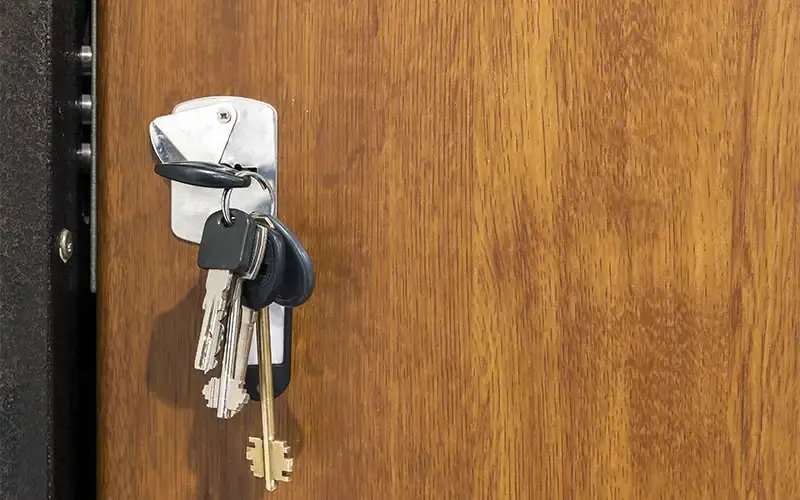
Broken Key in a Lock: The Main Rule
If a key breaks inside the lock and part of it remains inside, the most important rule is not to push the broken piece deeper and not to force the mechanism to turn. In many cases, a broken key can be removed carefully, but incorrect actions can damage the cylinder, block the lock and make door opening more difficult.
When a key breaks inside the lock, it is better to assess the situation first: are the doors open or closed, is the broken piece visible, and did the lock jam before? If the door does not open or the broken piece is deep inside, it is safer to contact a locksmith. Zamok24 helps in Vinnytsia when a key breaks inside the lock and access needs to be restored without rough damage.
Why You Should Not Use Random Objects
Most often, people try to remove the broken piece with a knife, needle, tweezers, wire, screwdriver or other random objects. It may seem like a simple solution, but these attempts often push the key fragment deeper, scratch the cylinder or damage the internal parts of the lock.
If the lock becomes fully blocked after such actions, it may require not only broken key removal but also emergency lock opening with further repair. That is why it is better not to experiment if you do not know the exact position of the broken piece or the condition of the mechanism.
If the Door Remains Closed
When the key breaks and the door remains closed, the situation becomes more complicated. It is important not to hit the lock, pull the door or try to turn the broken piece by force. This can fully block the mechanism or damage the cylinder.
In this case, careful emergency door opening may be needed. The locksmith first checks the type of lock, the position of the broken key, the condition of the door and the hardware, then chooses a method with minimal risk to the door leaf and frame.
If the Broken Key Is Visible
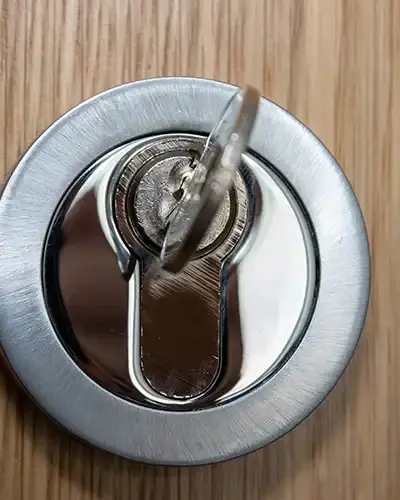
If part of the key slightly sticks out of the cylinder, it does not always mean that it is easy and safe to remove it yourself. Even in this situation, you can accidentally break the edge of the fragment, push it deeper or damage the cylinder opening.
It is better not to touch the broken piece unnecessarily and not to use sharp objects. A locksmith has the tools and experience to assess whether the key can be removed without disassembling the mechanism or whether emergency lock opening is needed first.
If the Broken Piece Is Deep Inside
If the key fragment is not visible or remains deep inside the cylinder, DIY attempts are almost always risky. In this case, it is easy to damage the internal parts of the lock or fully block the mechanism.
If the lock is on the entrance door of an apartment, house or office, it is better not to take risks. You can view a similar example in the Zamok24 portfolio: emergency door opening with a broken key.
Why the Key Broke Inside the Lock
A key often does not break by accident. The reason may be a worn cylinder, an old key, a poor-quality copy, door misalignment, a dirty mechanism or the habit of using too much force when opening the lock. If the key has been hard to insert or turned with jerks for a long time, the lock was already showing signs of a problem.
After removing the broken piece, it is important to check why the break happened. If the cause is not fixed, a new key may also break or the lock may jam again. In such cases, lock repair and replacement may be needed.
When the Cylinder Should Be Replaced
The cylinder does not always need to be replaced after a key breaks. If the broken piece is removed carefully and the lock works smoothly, the mechanism can sometimes remain in use. But if the key jams, the cylinder has play, the lock does not open on the first try or it has jammed before, replacement should not be delayed.
Cylinder replacement is also recommended if the keys were lost or there is a risk that the old set could be in someone else’s hands. You can view an example here: lock cylinder replacement after lost keys.
How the Locksmith Works
During the call, the locksmith clarifies where exactly the key broke: in an apartment door, office door, metal door, car lock or safe. It is also important to say whether the door is closed, whether the broken piece is visible and whether the lock had problems before.
On site, the locksmith checks the lock, door, handle and hardware. Then the broken piece is carefully removed, or emergency opening is performed if the door remains closed. After the work is completed, the condition of the mechanism is checked and recommendations are given regarding repair or replacement.
What Can Happen After Failed DIY Attempts
After DIY attempts, the broken piece often moves deeper, the cylinder becomes damaged and the lock may stop responding even to a new key. In this case, the locksmith has to deal with a more complicated fault, and after opening, repair or full replacement of the mechanism may be needed.
If the lock is already damaged, you should not continue experimenting. An example of further repair after an emergency situation is available on the page lock repair after emergency door opening.
Examples of Completed Work
View examples of work with broken keys, jammed locks and repair after emergency opening.
How to Avoid Breaking the Key Again
To prevent the key from breaking inside the lock again, do not ignore the first signs of a problem. If the key is difficult to insert, turns with jerks, the lock does not open on the first try or the door has to be pressed while opening, the mechanism should be checked in advance.
Also avoid using heavily worn keys, do not open the door by force and do not delay repair if the lock already works unstably. More useful materials are available in the Zamok24 blog.
Conclusion
If a key breaks inside the lock and you need to remove it, do not rush into DIY actions. Do not push the broken piece deeper, do not use random objects, do not hit the lock and do not force the mechanism to turn. This can make the problem more difficult.
Zamok24 helps in Vinnytsia when a key breaks inside the lock, the door does not open or the mechanism needs to be checked after an emergency situation. You can view all service areas on the Zamok24 services page.
Share this post:
Related Posts
What to do if a key is stuck in the lock, does not turn or will not come out. Zamok24 helps with eme...
When a lock cylinder should be replaced after a broken key and when repair may be enough. Practical...
Why keys break inside locks, what causes the problem, and how to prevent it. Practical advice from Z...