
Should You Replace the Lock Cylinder if a Key Breaks in the Lock
When a lock cylinder should be replaced after a broken key and when repair may be enough. Practical advice from Zamok24 in Vinnytsia.

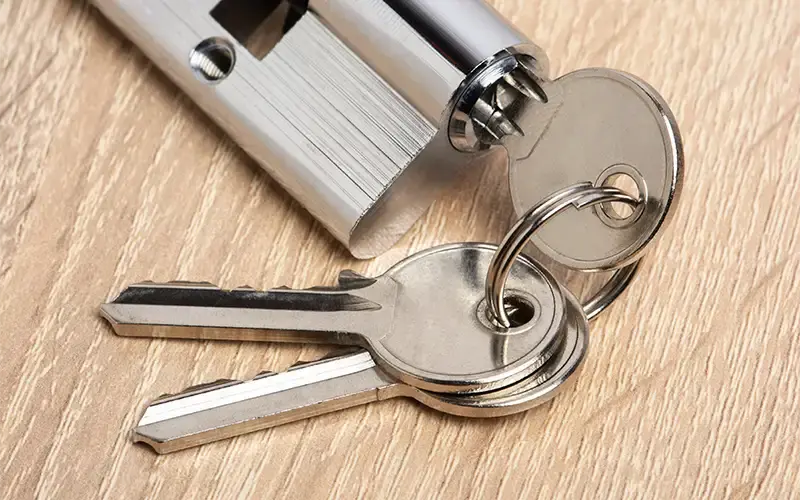
Should You Replace the Lock Cylinder if a Key Breaks in the Lock
If a key breaks in the lock, replacing the lock cylinder is not always necessary. In many cases, a locksmith can carefully remove the broken part of the key, open the door and check whether the mechanism is still in working condition. But if the cylinder is worn, the key was already sticking before, or the lock works unstably, replacement should not be delayed.
Zamok24 helps in Vinnytsia when a key breaks in the lock, the door does not open, or the mechanism needs to be checked after an emergency situation. The final decision about replacing the cylinder is made after the locksmith inspects the lock.
When the Cylinder Does Not Need to Be Replaced
The cylinder can often be kept if the broken key fragment was removed without damaging the mechanism and the lock works smoothly afterward. The key should enter easily, turn normally, and the door should open and close without jerks, grinding sounds or extra force.
If the lock worked properly before the key broke, and the key broke because of accidental pressure or wear of the key itself, it may be enough to remove the fragment and make a new quality key. Even in this case, the cylinder should be checked so the problem does not happen again.
When It Is Better to Replace the Cylinder
Cylinder replacement is needed if, after removing the broken key fragment, the key enters poorly, the mechanism sticks, the key turns with jerks or the cylinder has looseness. This usually means that the problem was not only with the key but also with the mechanism itself.
If the cylinder is worn, repair may only be a temporary solution. In this situation, it is better to consider lock repair and replacement to avoid the door jamming again at the wrong moment.
If the Key Broke Because the Lock Was Jammed
A key often breaks not by accident, but because the lock was already jammed or working under too much pressure. For example, the key entered the cylinder but did not turn, the door had to be pressed, or the lock opened only after several attempts.
In this situation, after the door is opened, it is important to check not only the cylinder but also the door, handle, hardware and door alignment. If the cause of the jamming is not fixed, even a new cylinder may soon start working incorrectly.
If the Door Remains Locked
If the key breaks and the door remains locked, the first step is to restore access to the room. Do not push the broken fragment deeper, hit the lock or try to force the remaining part of the key. This can damage the cylinder even more.
In such cases, careful emergency door opening is needed. You can view a similar example here: emergency door opening with a broken key.
Why You Should Not Buy a New Lock Immediately
A full lock replacement is not always required. In many cases, it is enough to replace only the cylinder if the lock body, handle and hardware are still in good condition. This can be faster and more cost-effective than replacing the entire mechanism.
However, if not only the cylinder but also the internal mechanism, bolts or lock body are damaged, the locksmith may recommend a full replacement. That is why inspection after opening is important, instead of making a decision blindly.
If Keys Were Lost or Could Be in the Wrong Hands
If a key broke in the lock, but there is also a risk that other keys were lost or could have reached other people, replacing the cylinder is the safer decision. After replacement, the old set of keys will no longer open the door.
Zamok24 has a related example in the portfolio: lock cylinder replacement after lost keys. This is important for apartments, houses, offices and any premises where access control matters.
How the Locksmith Checks the Cylinder After a Broken Key
After opening the door and removing the broken key fragment, the locksmith checks whether there is any internal damage to the cylinder, whether the key enters smoothly, and whether there is sticking, looseness or unusual noise. The lock is also checked with the door open and closed.
If the lock works well when the door is open but starts sticking when the door is closed, the problem may be related to the door position or the strike plate. In this case, replacing the cylinder alone may not fully solve the issue.
When Repair May Be Enough
If the mechanism is not heavily worn and the problem was caused by minor sticking, dirt or incorrect hardware operation, repair and adjustment may be enough. The locksmith can fix the cause, check how the key works and explain whether there is a risk of the problem repeating.
You can view a similar approach here: lock repair after emergency door opening. This shows why it is important not just to close the door again after opening, but to understand the cause of the failure.
When Full Lock Replacement Is Needed
Full lock replacement is needed if not only the cylinder is damaged but also the main mechanism. For example, the bolts move poorly, the lock jams often, the door does not close securely, or the old mechanism has already been repaired many times.
Full replacement is also worth considering if the lock is outdated, has a low level of security or no longer meets the needs of the property. In this situation, a new lock may be a more reliable solution than another repair of the old mechanism.
How to Avoid Breaking a Key Again
To prevent the key from breaking in the lock again, do not use bent, heavily worn or poorly made key copies. If the key starts entering tightly, sticking or turning with jerks, the lock should be checked in advance.
Also, do not open the door with force. If you need to press the door, lift the door leaf or pull the handle, the problem may not be only with the key but also with the door itself. More useful materials are available in the Zamok24 blog.
Examples of Completed Work
View examples of work with broken keys, lock cylinder replacement and lock repair in Vinnytsia.
Short Answer
Replacing the cylinder after a broken key is not always necessary. If the fragment was removed carefully and the lock works reliably after inspection, the cylinder can often stay. But if the mechanism sticks, has looseness, the key turns with difficulty or the keys were lost, replacement is the safer option.
An accurate answer can be given only after inspection. A Zamok24 locksmith checks the condition of the cylinder, door and hardware, then explains what is better in your situation: keep the lock, repair it, replace the cylinder or install a new mechanism.
Conclusion
If a key breaks in the lock, do not rush to replace the entire lock and do not try to remove the fragment yourself. First, access needs to be restored carefully, the broken part of the key removed, and the mechanism checked.
Zamok24 helps in Vinnytsia with broken keys, jammed locks, emergency door opening, lock repair and cylinder replacement. You can view all service areas on the Zamok24 services page.
Share this post:
Related Posts
What to do if a key is stuck in the lock, does not turn or will not come out. Zamok24 helps with eme...
Why keys break inside locks, what causes the problem, and how to prevent it. Practical advice from Z...
What to do if a key breaks inside a lock. Safe advice before calling a locksmith and why you should...