
Frozen Lock in Winter: What to Do If the Door Will Not Open
What to do if a lock freezes in winter and the door will not open. Zamok24 helps with emergency lock opening, broken keys and lock repair in Vinnytsia.

Frozen Lock in Winter: What to Do If the Door Will Not Open
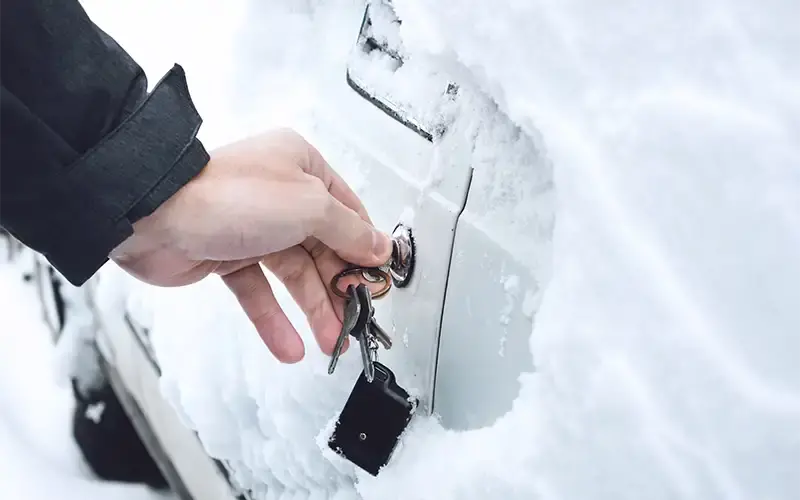
In winter, a lock can freeze because of moisture, temperature changes, condensation or snow that gets into the cylinder. In this situation, the key may not go in fully, may not turn or may get stuck in the lock. The main rule is not to use force, because the key can break inside the mechanism.
Zamok24 helps in Vinnytsia with emergency lock opening, door opening, broken key removal, lock repair and lock replacement after jamming.
Why a Lock Freezes
Most often, a lock freezes when moisture gets inside the cylinder. It may be snow, rain, condensation or water after a sudden temperature change. When the temperature drops below zero, moisture inside the mechanism turns into ice and blocks the movement of internal parts.
The problem can also appear in old or worn locks that already work with difficulty. If the key was sticking before winter, the lock turned with jerks or the door had to be pressed while opening, this problem may become stronger in freezing weather.
Do Not Turn the Key by Force
If the key does not turn, do not press harder or twist it sharply in the lock. In cold weather, metal becomes more vulnerable to pressure, and a frozen mechanism creates additional resistance. Because of this, the key can break directly inside the cylinder.
If the key has already started to bend, gets stuck or turns with great effort, it is better to stop. If the key has already broken, you can view the service broken key in the lock.
Do Not Pour Boiling Water into the Lock
Boiling water may seem like a quick solution, but it is dangerous for the lock. Hot water may temporarily melt the ice, but after cooling down, the moisture can freeze again inside the mechanism. As a result, the lock may become blocked even more.
In addition, water can get deeper into the cylinder, hardware or door leaf. If the door is metal, a sudden temperature change is also not good for the coating, plates and decorative elements.
Do Not Use Random Liquids
Do not pour household chemicals, unknown lubricants, alcohol mixtures or other random liquids into the lock. Some of these products can leave a sticky layer, attract dust or make the cylinder work worse after drying.
If the lock has already frozen and does not open, it is better not to experiment. Unsuccessful attempts can damage the mechanism, and after that not only opening but also lock repair or cylinder replacement may be needed.
If the Key Goes In but Does Not Turn
If the key goes into the lock but does not turn, the reason may not only be ice. The cylinder may already be worn, the door may have shifted, or the bolts may be working under pressure. Frost may simply make an old problem more noticeable.
In this situation, emergency door opening may be required, followed by checking the lock, hardware and door position.
If the Lock Froze in a Metal Door
Metal doors are more affected by temperature changes in winter, especially if the door faces the street, entrance area, vestibule or an unheated space. Because of this, moisture can collect around the lock, handle and hardware.
If a metal door does not open, do not hit the lock or pull the handle by force. You can view an example of work with a jammed mechanism here: opening a metal door with a jammed lock.
If the Lock Froze in a Utility Room
Locks in storage rooms, basements, garages, technical rooms or utility spaces often work in worse conditions: cold, moisture, dust and rare use. Because of this, they can suddenly jam in winter.
If the door of a storage room or utility space does not open, do not break the handle or force the door leaf. A similar example is available in the portfolio: opening a storage room door with a jammed lock.
If the Key Broke Because of Frost
When a lock freezes, the key often breaks because too much force is applied. If a broken part remains inside the cylinder, do not try to remove it with a knife, wire, needle or screwdriver. This can push the broken part deeper and damage the mechanism.
In such cases, the locksmith first evaluates the condition of the lock, opens the door and checks whether the cylinder can still be used. A similar case is available here: emergency door opening with a broken key.
When to Call a Locksmith
You should call a locksmith if the key does not turn, the lock is completely blocked, the key is stuck in the cylinder, the door does not open or there were already attempts to open it that made the situation worse. It is also better not to wait if you urgently need access to an apartment, house, office or room.
If the lock is frozen but the door has not yet been damaged, there is a better chance to solve the problem carefully. The fewer forceful actions are taken before the locksmith arrives, the lower the risk of additional repair.
What to Tell the Locksmith During the Call
During the call, say that the lock is frozen or does not open after frost. Also specify whether the key goes into the lock, whether it turns, whether it is stuck or broken, and whether the door is metal, apartment, office or utility room door.
Also provide the address or district in Vinnytsia and mention whether there were any attempts to open the door yourself. All main service areas are available on the Zamok24 services page.
What to Check After Opening
After opening, it is important to check whether the key, cylinder, handle, hardware and lock work normally. If the key turns with jerks, the cylinder sticks or the door has to be pressed, the problem may not be only frost.
In such cases, lock repair and replacement may be needed. You can view an example of work after an emergency situation here: lock repair after emergency door opening.
When to Replace the Cylinder
If the lock works unstably after thawing, the key sticks, the cylinder has play or the mechanism was already worn, it is better to consider cylinder replacement. Otherwise, the problem may return during the next frost.
If the keys were lost or there is a risk that other people may have access, cylinder replacement is also the right decision. Example of this work: lock cylinder replacement after lost keys.
Examples of Completed Work
View examples of emergency door opening, jammed locks, broken keys and lock repair after opening in Vinnytsia.
How to Prevent the Lock from Freezing Again
To reduce the risk of the lock freezing again, it is important to check its condition before frost starts. If the key already goes in tightly, the cylinder sticks or the door has to be pressed, the mechanism should be checked in advance. A worn lock is more likely to block in winter.
It is also worth protecting the lock from direct moisture, avoiding damaged keys and not waiting until the mechanism fully jams. You can read more useful materials about doors, locks and emergency situations in the Zamok24 blog.
Conclusion
If a lock freezes in winter, do not force the key, pour boiling water into the mechanism or use random liquids. Such actions can break the key, damage the cylinder and make the repair more expensive.
Zamok24 helps in Vinnytsia with emergency lock opening, door opening, broken key removal, lock repair and cylinder replacement. If the lock does not open after frost, it is better to call a locksmith and solve the problem carefully.
Share this post:
Related Posts
Learn how lock maintenance helps prevent jammed locks, broken keys and emergency door opening. Pract...
How to choose an emergency locksmith for lock opening, door opening, car unlocking or safe opening i...

What documents and access confirmation may be needed for emergency door, lock, car or safe opening i...